


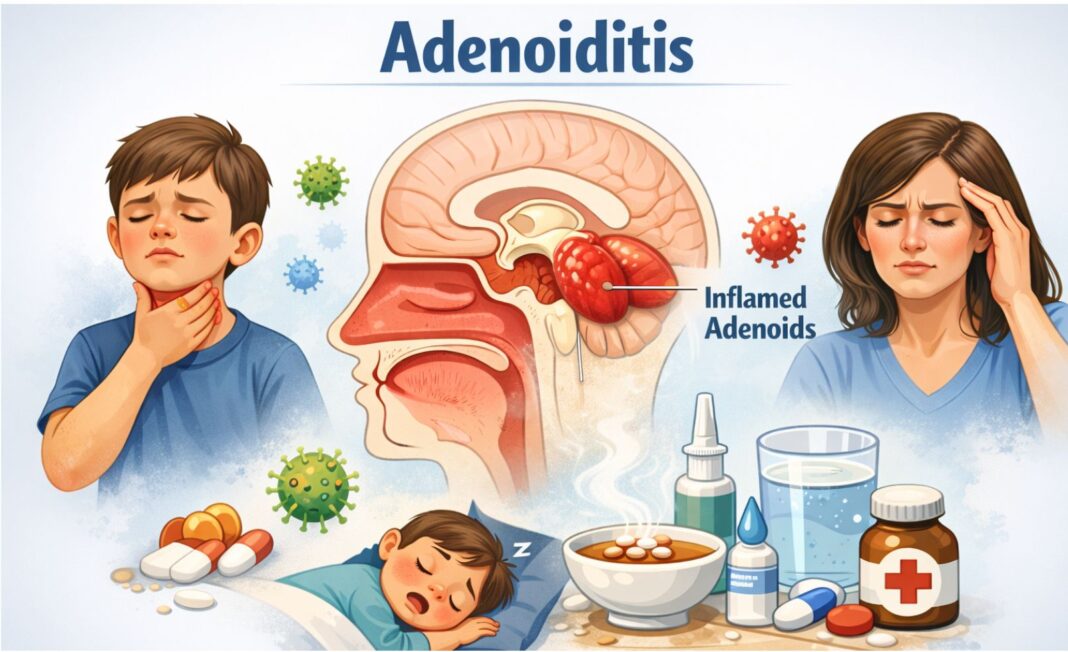

Adenoidid affects the body and the adenoids, which are the small glands that are located in the upper part of the throat behind your nose. These glands are part of the immune system and trap bacteria and viruses in the body, which is more common in children. However, the adenoids become enlarged or infected, which, in medical terms, is called ‘adenoidid.’ If left untreated, this condition can cause numerous problems for the patient.
This article presents a guide for both adults and children suffering from adenoidid, detailing its causes, symptoms, and diagnoses, as well as the most effective remedies.
What is Adenoidid?
Adenoidid is the swelling, inflammation, or infection of the adenoids. These glands are known to gradually shrink in size as the body matures. However, certain individuals, and most often children, can experience continuous swelling or infection of these glands. When this occurs, it can create many health problems, especially regarding their airway and sleep.
Some important facts regarding adenoids:
- They can be found behind the nose and above the roof of the mouth.
- Adenoids are a component of the immune system and are responsible for helping the body fight infections.
- Adenoids can become inflamed due to repeated exposure to infection from the virus or bacteria.
Causes of Adenoidid
A variety of reasons can be responsible for the occurrence of adenoidid:
Frequent Infection
In terms of viral infections, the common cold, the flu, and other infections of the respiratory tract can cause inflammation of the adenoids.
In terms of bacterial infection, streptococcus or other bacteria can cause infections again and again.
Allergies
Allergic reactions to dust, pollen, and the dander of pets can all contribute to chronic inflammation.
Environmental Reason
Adenoid inflammation can also be a result of exposure to secondhand smoke or air pollution.
Hygiene that is inadequate and crowds can contribute to a higher risk of infections.
Genetic Predisposition
Some youngsters are born with larger adenoids or are more susceptible to infection.
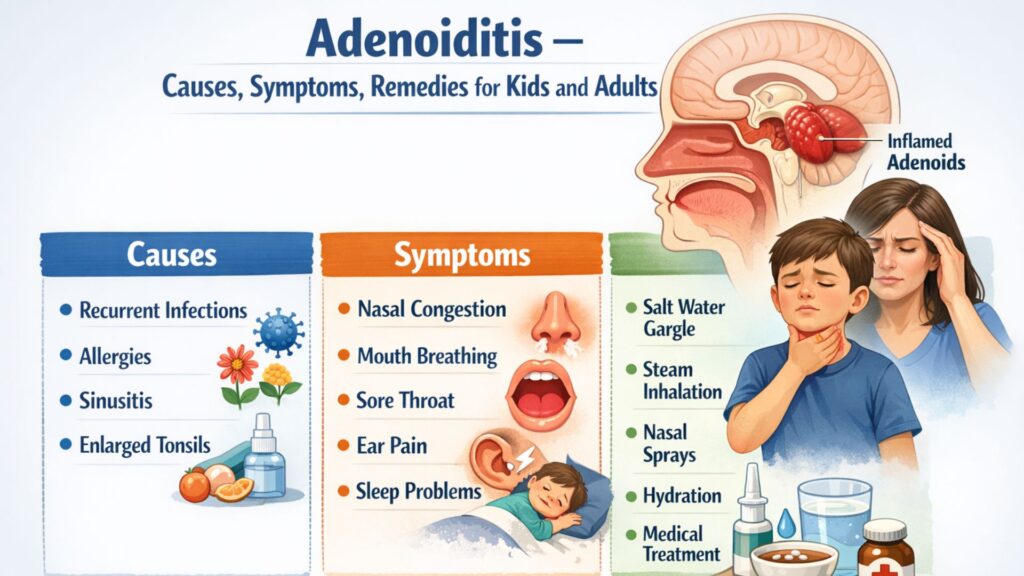
Adenoidid Symptoms
In adults and children, the symptoms are going to depend on the level of severity.
In Children
- Nasal congestion: Persistent stuffy nose
- Mouth breathing: Often due to blocked nasal passages
- Snoring and sleep apnea: Pauses in breathing during sleep
- Speech changes: Nasal-sounding speech or difficulty pronouncing words
- Frequent ear infections: Due to blocked Eustachian tubes
In Adults
- Chronic nasal congestion: Difficulty breathing through the nose
- Frequent sinus infections
- Snoring or disrupted sleep
- Postnasal drip: Persistent throat irritation
Note: Adults rarely have enlarged adenoids, but chronic infections or residual adenoid tissue can cause symptoms.
How Adenoidid Is Diagnosed
Doctors use a combination of methods to diagnose adenoidid:
- Physical Examination: Checking nasal passages and throat
- Imaging Tests: X-rays or CT scans to assess adenoid size
- Endoscopy: A small camera inserted through the nose to examine the adenoids
- Medical History: Assessing recurrent infections, sleep issues, and allergies
Ear infections, sleep apnea, and growth issues in children could result from a lack of adequate diagnosis.
Remedies and Treatments for Adenoidid
Treatment depends on the severity and underlying cause.
Home Remedies
- Salina nasal rinses: Reduce congestion and irritants from the nasal cavity.
- Humidifiers: Moist air may assist in the relief of nasal discomfort.
- Hydration: Helps maintain the moisture in the throat and the nasal passages.
- Warm compresses: Assist in the relief of facial discomfort due to sinus pressure.
Medications
- Antibiotics: For the bacterial infection that causes the swelling of the adenoids.
- Anti- inflammatory medication: Helps in the reduction of swelling and discomfort.
- Nasal steroid sprays: Children frequently use them to decrease the size of the adenoids.
Surgical Intervention
Adenoidectomy. Surgical removal of the adenoids is suggested when:
- Chronic infections are a problem.
- Breathing or sleep is significantly compromised.
- Ear infections persist despite treatment.
Surgery is usually very effective and safe, especially for children who have recurrent problems with their adenoids.
Preventing Adenoidid
While not every case is preventable, these actions help decrease the likelihood.
- Be sure to wash your hands frequently in an effort to prevent infections.
- Stay away from secondhand smoke and smoke in the air.
- Treat allergies with medication or avoidance to make the allergies better.
- Eat a healthy diet and drink water to help your immune system.
Complications of Untreated Adenoidid
Untreated adenoidid can lead to the following problems:
- Sleep problems: Snoring, sleep apnea, and daytime drowsiness.
- Ear issues: Chronic otitis media (ear infections)
- Speech and dental problems: Children may have problems with misaligned teeth or have a nasal voice.
- Chronic sinusitis.
To prevent the above problems its very important to find and treat the problems early.
Most Common Adenoidid Questions
1. Can adults suffer from adenoidid?
It is uncommon, but yes. Adults can have residual or chronically inflamed adenoid tissue.
2. How is adenoidid different from tonsillitis?
Adenoidid affects the adenoids located in the nasal cavity, and tonsillitis affects the tonsils found in the throat. Each can affect swelling and infection.
3. Can adenoidid run in families?
Some children may run the risk of having larger adenoids, or the risk of infection may run in families.
4. What is the recovery time for adenoidid?
With home treatment and medication, mild cases can improve in days. Severe cases may require surgery.
Conclusion
Adenoidid is a condition that can go unrecognized, especially for children. Symptoms that are recognized early, combined with a medical evaluation and timely treatment, ranging from home care to surgical removal, can significantly improve the patient’s quality of life.
Familiarity with the cause, symptoms, and treatment options can help parents, caregivers, and adults take the necessary steps to resolve adenoid issues.
Timely treatment and raising awareness are the two most important factors in efficiently managing adenoidid, for both children and adults.
Continue reading more blogs here:
Repmold Methods and Applications in Industrial Production
Fonendi: Significance, Definition, and Importance in the Digital Era